Beginning with Fidelity Index Funds vs Vanguard Index Funds, the narrative unfolds in a compelling and distinctive manner, drawing readers into a story that promises to be both engaging and uniquely memorable.
When exploring the world of index funds, two prominent players stand out: Fidelity and Vanguard. Let’s delve into their performance, expenses, diversification strategies, and more to uncover the nuances of these investment options.
Fidelity Index Funds vs Vanguard Index Funds

When comparing Fidelity Index Funds and Vanguard Index Funds, it is essential to consider various factors that can impact investment decisions. Two of the most crucial aspects to evaluate are historical performance and expense ratios.
Historical Performance
When looking at the historical performance of Fidelity Index Funds and Vanguard Index Funds, it is important to analyze their returns over different time periods. Both companies have a long track record of offering index funds that aim to replicate the performance of specific benchmarks. Investors typically look at the annualized returns over 3, 5, and 10-year periods to assess how well these funds have performed compared to their respective benchmarks.
Expense Ratios
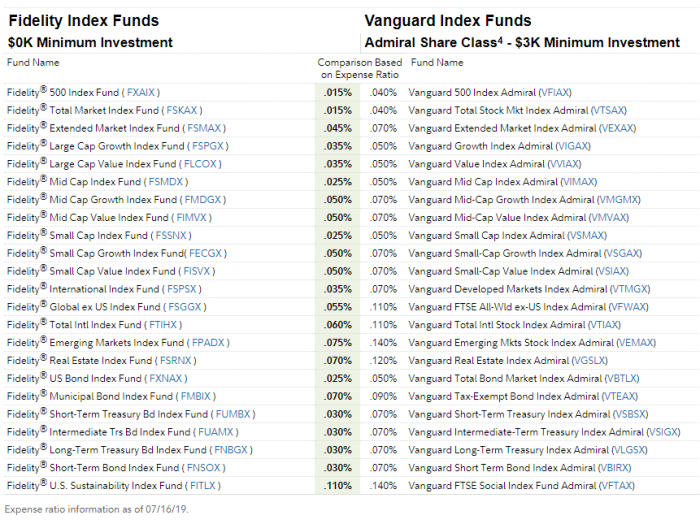
Expense ratios play a significant role in the overall performance of index funds. Fidelity and Vanguard are known for offering low-cost index funds, but the expense ratios can vary between the two companies and even within their own lineup of funds. It is crucial to compare the expense ratios of similar index funds from Fidelity and Vanguard to understand how much of the investment returns are being eroded by fees.
Diversification Strategies
Diversification is key to managing risk in an investment portfolio. When comparing Fidelity Index Funds and Vanguard Index Funds, it is essential to look at the diversification strategies employed by each company. This includes analyzing the underlying assets held in these funds, the sectors they represent, and the geographic diversification. Understanding the diversification strategies can help investors assess the level of risk in these funds and how they align with their investment goals.
Top Holdings
The top holdings in Fidelity Index Funds and Vanguard Index Funds can give investors insights into the composition of these funds. By looking at the top holdings, investors can understand which companies or assets have the most significant impact on the fund’s performance. Comparing the top holdings of Fidelity and Vanguard index funds can provide valuable information on the level of concentration and sector exposure in these funds.
Income Funds
Income funds are investment funds that primarily focus on generating regular income for investors through dividends, interest payments, or other distributions. These funds typically invest in fixed-income securities like bonds, preferred stocks, and other income-producing assets. Unlike index funds that aim to track a specific market index, income funds prioritize providing a steady stream of income to investors.
Types of Securities in Income Funds
Income funds typically hold a diversified portfolio of fixed-income securities such as government bonds, corporate bonds, high-yield bonds, preferred stocks, and dividend-paying stocks. These securities offer regular interest payments or dividends, which contribute to the income generated by the fund.
Risk-Return Profile of Income Funds
Income funds generally have a lower risk profile compared to equity-based index funds, as they invest in more stable fixed-income securities. However, this lower risk also translates to potentially lower returns, as the focus is on income generation rather than capital appreciation. Investors looking for a more conservative investment approach with a steady income stream may find income funds to be a suitable option.
Popular Income Funds in the Market
1. Vanguard High Dividend Yield Index Fund (VHDYX)
This fund focuses on investing in dividend-paying stocks with the goal of generating a high level of income for investors.
2. Fidelity Capital & Income Fund (FAGIX)
This fund invests in a mix of high-yield bonds, convertible securities, and dividend-paying stocks to provide a combination of income and capital appreciation for investors.
3. PIMCO Income Fund (PONDX)
Known for its active management approach, this fund invests in a diversified portfolio of fixed-income securities to generate income while managing risk effectively.
Inflation Hedge
An inflation hedge refers to an investment that can protect the investor’s purchasing power from the effects of inflation. Inflation erodes the real value of money over time, so it is essential for investors to consider this when making investment decisions.Index funds can serve as an effective hedge against inflation because they typically consist of a diversified portfolio of assets that can adjust to changing economic conditions.
As the prices of assets within the index rise with inflation, the value of the index fund also increases, helping investors preserve their purchasing power.
Strategies Employed by Fidelity Index Funds and Vanguard Index Funds
Both Fidelity and Vanguard Index Funds employ similar strategies to hedge against inflation. They often include a mix of equities, fixed-income securities, and other assets in their portfolios to provide diversification and protect against inflationary pressures. Additionally, these funds may also invest in inflation-protected securities or commodities to further shield investors from the negative impacts of inflation.Considering inflation is crucial when choosing between index funds as it can significantly impact the real returns of an investment over time.
Investors should look for funds that have a track record of outperforming inflation and consider the fund’s historical performance during inflationary periods.
Insurance Premiums
Insurance premiums play a significant role in the relationship between index funds and investors. These premiums are the amount of money an individual or business pays for an insurance policy to protect against potential risks and losses. When it comes to index funds, insurance premiums can impact investment decisions and overall portfolio management strategies in various ways.
Impact on Investment Decisions
Insurance premiums can affect investment decisions in index funds by adding an additional cost to the overall investment. Investors need to consider the impact of insurance premiums on their returns and weigh the benefits of insurance coverage against the added cost. Some index funds may offer insurance as part of the investment package, while others may require investors to purchase separate insurance policies.
Role in Portfolio Management
In terms of overall portfolio management, insurance premiums can influence the diversification of investments within an index fund. Investors may choose to allocate a portion of their funds towards insurance-backed securities to mitigate risks and protect their assets. However, it’s essential to carefully assess the cost-effectiveness of insurance premiums and ensure they align with the investment goals and risk tolerance of the investor.
Navigating Insurance Premiums
To navigate insurance premiums in relation to index funds, investors should conduct thorough research and analysis on the insurance options available. It’s crucial to understand the coverage provided by insurance policies and evaluate the cost-benefit ratio. Additionally, investors can seek advice from financial advisors or experts to determine the optimal insurance strategy that complements their index fund investments.
In summary, the comparison between Fidelity Index Funds and Vanguard Index Funds sheds light on key differences that investors need to consider. Whether it’s historical performance, expense ratios, or diversification strategies, each aspect plays a crucial role in shaping investment decisions.
Clarifying Questions
What are the main differences between Fidelity Index Funds and Vanguard Index Funds?
While both offer index funds, Fidelity and Vanguard have distinct historical performance, expense ratios, and top holdings that set them apart.
How do Fidelity and Vanguard Index Funds hedge against inflation?
Fidelity and Vanguard employ different strategies to hedge against inflation, which can impact their performance in varying market conditions.
Can insurance premiums affect investments in index funds?
Insurance premiums can indirectly impact investment decisions in index funds, especially when considering the overall portfolio management strategy.