
Embark on a journey through the intricacies of Homeowners Insurance Premiums Explained, where we unravel the key factors affecting your premiums and delve into ways to optimize your coverage and costs.
Understanding Homeowners Insurance Premiums
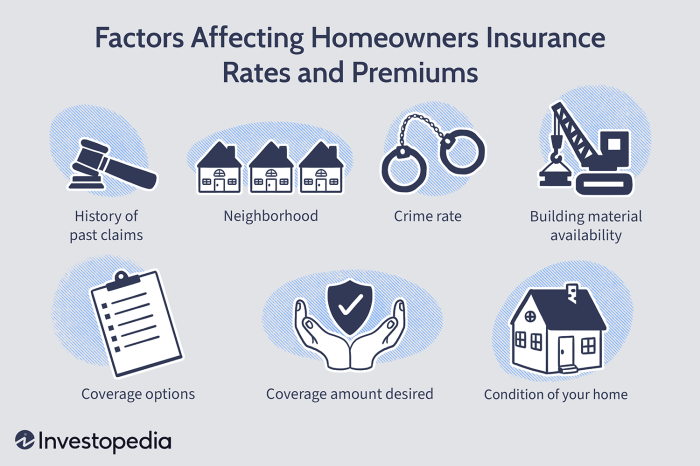
When it comes to homeowners insurance premiums, several factors come into play that can influence the cost of coverage. Let’s take a closer look at some of the key elements that impact how much you pay for your homeowners insurance.
Location
The location of your home plays a significant role in determining your homeowners insurance premiums. Areas prone to natural disasters such as hurricanes, earthquakes, or wildfires will generally have higher premiums due to the increased risk of damage.
Age of the Home
The age of your home is another factor that insurers consider when calculating premiums. Older homes may have outdated electrical systems, plumbing, or roofing, which could increase the likelihood of claims. As a result, older homes typically have higher insurance premiums.
Coverage Limits
The coverage limits you choose for your homeowners insurance policy will also impact your premiums. Opting for higher coverage limits means more protection in case of a covered loss, but it also comes with a higher premium. On the other hand, choosing lower coverage limits can help reduce your premiums, but may leave you financially vulnerable in the event of a major disaster.
Policy Deductibles and Coverage Options
Your policy deductibles and coverage options can also affect the cost of your homeowners insurance premiums. A higher deductible typically results in lower premiums, as you’ll be responsible for paying more out of pocket before your insurance kicks in. Additionally, adding optional coverage such as flood insurance or personal property endorsements can increase your premiums but provide extra protection.
Types of Homeowners Insurance Policies
When it comes to homeowners insurance, there are various types of policies available to choose from. Each type offers different levels of coverage and comes with its own set of premium rates.
HO-1 Policy
The HO-1 policy is a basic form of coverage that typically protects against specific named perils, such as fire, theft, vandalism, and certain natural disasters. However, it is important to note that this type of policy is becoming less common due to its limited coverage.
HO-2 Policy
The HO-2 policy provides more comprehensive coverage compared to the HO-1 policy. It typically covers the same perils as the HO-1 policy but includes additional protections, such as coverage for falling objects or damage from the weight of ice, snow, or sleet.
HO-3 Policy
The HO-3 policy is the most popular choice for homeowners as it offers broad coverage for both the structure of the home and personal belongings. This policy generally covers all perils except for those specifically excluded in the policy.
HO-5 Policy
The HO-5 policy is the most comprehensive type of coverage available. It offers all-risk coverage for both the structure of the home and personal belongings, meaning it protects against all perils except for those that are explicitly listed as exclusions in the policy.
It’s important to note that the type of policy chosen can significantly impact premium rates. More comprehensive policies like HO-3 and HO-5 tend to have higher premiums due to their broader coverage compared to basic policies like HO-1 and HO-2.
Ways to Lower Homeowners Insurance Premiums
When it comes to homeowners insurance, there are several ways you can lower your premiums to save money. By taking certain steps, homeowners can potentially reduce the cost of their insurance while still maintaining adequate coverage.
Bundling Home and Auto Insurance
One effective way to lower your homeowners insurance premiums is by bundling your home and auto insurance policies with the same insurance provider. Insurance companies often offer discounts to customers who purchase multiple policies from them. By combining your home and auto insurance, you can take advantage of these discounts and save money on both policies.
Home Improvements and Security Systems
Making improvements to your home and installing security systems can also help lower your homeowners insurance premiums. Upgrading your home with features like a new roof, storm shutters, or impact-resistant windows can reduce the risk of damage from natural disasters and may qualify you for discounts. Additionally, installing a security system that includes burglar alarms, smoke detectors, and fire alarms can make your home safer and decrease the likelihood of insurance claims.
Fire-Resistant Materials
Using fire-resistant materials in your home can further decrease your insurance premiums. Materials like fire-resistant roofing, siding, and insulation can help protect your home from fire damage and may make you eligible for lower insurance rates. By investing in these protective measures, you not only enhance the safety of your home but also potentially reduce your insurance costs in the long run.
Income Funds vs. Index Funds
Income funds and index funds are two popular types of mutual funds that cater to different investor preferences and goals. Income funds focus on generating regular income through dividends, interest payments, and other sources, making them ideal for investors seeking steady cash flow. On the other hand, index funds aim to replicate the performance of a specific market index, such as the S&P 500, by investing in the same securities in the same proportions.
Income Funds
Income funds typically invest in bonds, preferred stocks, and dividend-paying equities to generate income for investors. These funds are considered more conservative than growth funds, as they prioritize stable returns over capital appreciation. Investors nearing retirement or those looking for a steady income stream often favor income funds due to their relatively lower risk profile.
- Income funds are suitable for investors looking for regular income and capital preservation.
- These funds may be less volatile compared to equity funds, making them more suitable for conservative investors.
- Investors can benefit from diversification within the income fund, reducing individual security risk.
Index Funds
Index funds are passively managed funds that aim to replicate the performance of a specific market index. By investing in the same securities as the index they track, index funds offer broad market exposure and low costs. These funds are popular among investors seeking market-matching returns and diversification across various sectors.
- Index funds provide diversified exposure to a specific market index, reducing unsystematic risk.
- They offer low expense ratios compared to actively managed funds, resulting in cost-efficient investing.
- Investors can benefit from long-term growth potential by holding index funds that track major indices.
Investors can use income funds to supplement their current income or provide stability to their portfolio during market downturns. On the other hand, index funds can serve as a core holding in a diversified investment portfolio, offering broad market exposure and low maintenance requirements. Understanding the differences between income funds and index funds can help investors make informed decisions based on their financial goals and risk tolerance levels.
Inflation Hedge
An inflation hedge is an investment that is expected to retain or increase its value over time, protecting the investor from the erosion of purchasing power caused by inflation. It is important for investors to consider incorporating inflation hedges into their portfolios to safeguard their wealth against the effects of rising prices.
Assets as Inflation Hedges
- Real Estate: Real estate properties tend to increase in value over time, serving as a hedge against inflation.
- Commodities: Investments in commodities such as gold, silver, and oil can provide a hedge against inflation as their prices tend to rise during inflationary periods.
- TIPS (Treasury Inflation-Protected Securities): These government bonds are indexed to inflation, ensuring that the investor receives a return that keeps pace with rising prices.
Strategies to Protect Portfolios
- Diversification: By spreading investments across different asset classes, investors can reduce the impact of inflation on their overall portfolio.
- Stocks of Inflation-Resistant Companies: Investing in companies that have the ability to adjust prices or have strong pricing power can help protect against inflation.
- Adjustable-Rate Securities: Bonds or loans with interest rates that adjust with inflation can help maintain purchasing power in a rising price environment.
Insurance Premiums and Financial Planning
When it comes to financial planning, insurance premiums play a crucial role in protecting your assets and mitigating risks. Understanding how homeowners insurance premiums fit into your overall budgeting and savings strategy is essential for securing your financial future.
Impact on Budgeting and Savings
Homeowners insurance premiums can have a significant impact on your monthly expenses and overall budget. These costs must be factored into your financial plan to ensure that you can afford them without compromising other essential expenses.
- Regularly review your insurance coverage to avoid overpaying for unnecessary protection.
- Consider increasing your deductible to lower your premiums, but make sure you have enough savings to cover the higher deductible in case of a claim.
- Shop around for competitive rates from different insurance providers to find the best deal for your needs.
Incorporating Insurance Costs into Financial Plan
Integrating insurance costs into your comprehensive financial plan requires careful consideration and strategic decision-making. By prioritizing insurance within your budget, you can safeguard your assets and provide financial security for you and your family.
Remember that insurance premiums are a worthwhile investment in protecting your home and belongings from unexpected events.
- Create a separate category for insurance expenses in your budget to track and manage these costs effectively.
- Regularly reassess your insurance needs as your financial situation changes, such as acquiring new assets or increasing your property value.
- Work with a financial advisor to optimize your insurance coverage and ensure that it aligns with your long-term financial goals.
In conclusion, understanding the nuances of homeowners insurance premiums is crucial for making informed decisions to protect your home and assets effectively. Dive into the details, secure your coverage, and pave the way for a financially sound future.
Common Queries
What are some factors that influence homeowners insurance premiums?
Factors include location, age of the home, coverage limits, policy deductibles, and coverage options.
How can homeowners lower their insurance premiums?
Homeowners can reduce premiums by bundling home and auto insurance, making home improvements, installing security systems, and using fire-resistant materials.
What types of homeowners insurance policies are available?
Types include HO-1, HO-2, HO-3, and HO-5 policies, each offering different coverage and premium rates.
What is an inflation hedge and why is it important for investors?
An inflation hedge protects portfolios against inflation by investing in assets that retain value during inflationary periods.
How do insurance premiums impact financial planning?
Insurance premiums play a significant role in budgeting and savings within a comprehensive financial plan.


