
With Inflation Hedge Stocks at the forefront, this paragraph opens a window to an amazing start and intrigue, inviting readers to embark on a storytelling casual formal language style filled with unexpected twists and insights.
In a world where financial stability is paramount, understanding the role of inflation hedge stocks can be the key to protecting and growing your wealth. Let’s delve into what makes these stocks unique and how they can shield your investments from the erosive effects of inflation.
Income Funds
Income funds are a type of mutual fund or exchange-traded fund (ETF) that primarily focuses on generating regular income for investors through dividends, interest payments, or other distributions. These funds typically invest in securities such as bonds, dividend-paying stocks, real estate investment trusts (REITs), and other income-generating assets.
Benefits of Income Funds vs. Growth Funds
Income funds offer several advantages over growth funds, including:
- Steady Income: Income funds provide a regular stream of income to investors, making them suitable for those seeking consistent cash flow.
- Lower Volatility: Income funds tend to be less volatile than growth funds, offering more stability during market downturns.
- Diversification: Income funds often hold a diversified portfolio of income-generating assets, reducing risk compared to concentrated growth investments.
Top-Performing Income Funds in the Market
Some examples of top-performing income funds in the market include:
- Vanguard High Dividend Yield Index Fund (VHDYX): This fund focuses on high-dividend-paying stocks, offering investors exposure to companies with a history of consistent dividend payments.
- PIMCO Income Fund (PONAX): Managed by PIMCO, this fund invests in a mix of bonds, mortgage-backed securities, and other fixed-income assets to generate income for investors.
- Fidelity Strategic Income Fund (FSICX): This fund seeks to provide a high level of current income by investing in a diversified portfolio of fixed-income securities.
Index Funds
Index funds are a type of mutual fund or exchange-traded fund (ETF) that tracks a specific financial market index, such as the S&P 500 or the Dow Jones Industrial Average. The goal of index funds is to replicate the performance of the index it is tracking, rather than trying to outperform it through active management.
Advantages of Investing in Index Funds
Index funds offer several advantages for investors:
- Diversification: Index funds provide instant diversification by holding a wide range of securities within a specific index.
- Low Costs: Due to their passive management style, index funds typically have lower expense ratios compared to actively managed funds.
- Consistent Performance: Index funds tend to provide consistent returns over the long term, as they aim to match the performance of the underlying index.
- Easy to Understand: Investing in index funds is straightforward, making it accessible to both novice and experienced investors.
Popular Index Funds and Their Performance
Some examples of popular index funds include:
| Index Fund | Tracking Index | Performance |
|---|---|---|
| S&P 500 Index Fund | S&P 500 | Historically, the S&P 500 has provided an average annual return of around 7-10%. |
| Vanguard Total Stock Market Index Fund | CRSP US Total Market Index | This fund aims to track the performance of the entire U.S. stock market, providing broad exposure to various sectors. |
| iShares MSCI Emerging Markets ETF | MSCI Emerging Markets Index | Investing in emerging markets can offer higher growth potential, but also comes with increased risk and volatility. |
Inflation Hedge
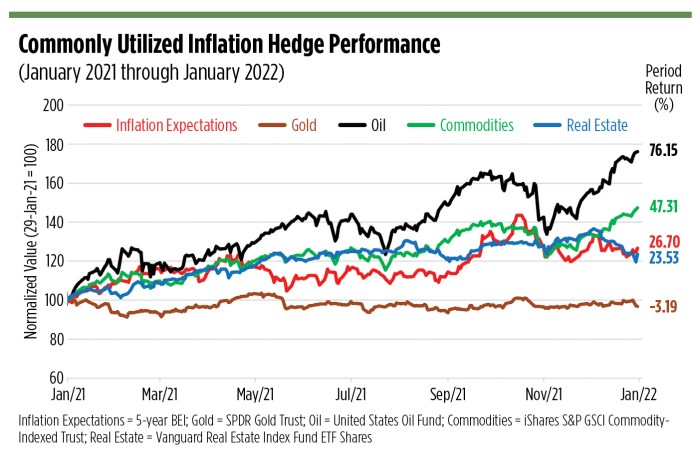
Inflation hedge stocks are investments that have the potential to maintain or increase in value during times of rising inflation. These stocks typically belong to industries that can pass on increased costs to consumers, have pricing power, or own tangible assets that appreciate in value with inflation.
Types of Stocks as Inflation Hedges
- Commodities: Commodities such as gold, silver, and oil are traditional inflation hedges as their prices tend to rise in inflationary environments.
- Real Estate Investment Trusts (REITs): REITs invest in real estate properties that can increase in value with inflation, making them a popular choice for inflation protection.
- Consumer Staples: Companies that produce essential goods like food, beverages, and household products often perform well during inflation as demand for these items remains stable.
- Utilities: Utility companies provide essential services like electricity and water, making them relatively immune to economic downturns and inflation.
Choosing the Right Inflation Hedge Stocks
- Focus on companies with strong pricing power: Look for businesses that can increase prices to offset inflationary pressures without losing customers.
- Diversify across industries: Spread your investments across different sectors to reduce risk and ensure that your portfolio is well-positioned to weather inflationary periods.
- Consider dividend-paying stocks: Companies that pay regular dividends can provide a source of income during inflation and offer some protection against rising prices.
- Research historical performance: Analyze how different stocks have performed during past inflationary periods to identify those that have demonstrated resilience to inflation.
Insurance Premiums
Insurance premiums are the amount of money an individual or business pays to an insurance company in exchange for insurance coverage. These premiums can vary based on several factors and can be influenced by economic conditions such as inflation.
Factors Influencing Insurance Premiums
- The type and amount of coverage: The more coverage you need, the higher your premium is likely to be.
- Age and health: Younger and healthier individuals typically pay lower premiums.
- Location: Where you live can impact your premiums due to factors such as crime rates and weather risks.
- Claims history: Individuals who have made more claims in the past may face higher premiums.
- Market conditions: Changes in the insurance market can also affect premiums.
Relationship Between Inflation and Insurance Premiums
- Inflation can impact insurance premiums by increasing the cost of goods and services, including materials needed for repairs and medical treatments.
- As inflation rises, insurance companies may adjust their premiums to account for the increased costs associated with providing coverage.
- Individuals may find that their insurance premiums increase over time as a result of inflation affecting the overall economy.
Tips for Managing Rising Insurance Premiums
- Shop around: Compare quotes from different insurance companies to find the best rates.
- Bundle policies: Consider bundling multiple insurance policies with the same provider for potential discounts.
- Review coverage: Periodically review your coverage to ensure you are not paying for more than you need.
- Improve risk factors: Take steps to improve your health, home security, or driving record to potentially lower premiums.
- Consider higher deductibles: Opting for a higher deductible can lower your premiums, but be prepared to pay more out of pocket in the event of a claim.
As we conclude our exploration of inflation hedge stocks, it becomes clear that these specialized investments offer a strategic tool for investors seeking to navigate the uncertainties of the market. By incorporating these assets into your portfolio, you can build a robust financial foundation that withstands the test of time.
FAQ Resource
What exactly are inflation hedge stocks?
Inflation hedge stocks are shares of companies that have historically shown the ability to outperform during periods of rising inflation, thus providing a safeguard against the devaluation of currency.
How can I identify suitable inflation hedge stocks?
Look for companies with strong pricing power, stable cash flows, and a history of increasing dividends. These characteristics often indicate resilience against inflationary pressures.
Are inflation hedge stocks a guaranteed protection against inflation?
While these stocks can offer a degree of protection, no investment is entirely risk-free. It’s essential to diversify your portfolio and regularly reassess your investment strategy.


