Embark on a journey into the realm of Best Inflation Hedge Investments 2024, where strategic financial decisions pave the way for stability and growth. Delve into this comprehensive guide with a blend of informative insights and practical advice that will empower you to navigate the complex world of investments with confidence.
Explore the nuances of income funds, index funds, effective inflation hedges, and optimizing insurance premiums to safeguard your assets amidst economic fluctuations.
Income Funds
Income funds are investment funds that primarily focus on generating regular income for investors through dividends, interest payments, and other income-producing securities. These funds typically consist of a diversified portfolio of fixed-income securities such as bonds, preferred stocks, and money market instruments. Unlike growth funds that aim for capital appreciation, income funds prioritize providing a steady stream of income to investors.
Popular Income Funds
- Vanguard High Dividend Yield Index Fund (VHDYX): This fund seeks to track the performance of the FTSE High Dividend Yield Index, which includes stocks of companies that pay higher-than-average dividends.
- PIMCO Income Fund (PONAX): Managed by Pacific Investment Management Company, this fund invests in a variety of fixed-income securities to generate income for investors.
- Fidelity Strategic Dividend & Income Fund (FSDIX): This fund focuses on both dividends and capital appreciation by investing in dividend-paying stocks and fixed-income securities.
Benefits and Risks
Investing in income funds can offer several benefits, such as:
- Steady Income: Income funds provide a predictable source of income through regular dividend payments.
- Diversification: These funds typically hold a variety of income-generating securities, reducing the risk associated with investing in a single asset.
- Professional Management: Income funds are managed by experienced professionals who make investment decisions on behalf of investors.
However, there are risks involved in investing in income funds, including:
- Interest Rate Risk: Fluctuations in interest rates can impact the value of fixed-income securities held by the fund.
- Credit Risk: There is a risk that the issuers of the bonds or other securities held by the fund may default on their payments.
- Inflation Risk: Inflation can erode the purchasing power of the income generated by the fund over time.
Index Funds
Index funds are a type of mutual fund or exchange-traded fund (ETF) that aims to track the performance of a specific market index, such as the S&P 500 or the Dow Jones Industrial Average. These funds are passively managed, meaning they aim to replicate the holdings and performance of the index they are tracking, rather than trying to outperform it through active trading.Index funds are known for their low costs compared to actively managed funds, as they require less frequent trading and have lower management fees.
This cost-efficiency can lead to better long-term returns for investors, as fees can eat into overall investment performance over time.
Top Index Funds for Long-Term Investments
- Vanguard Total Stock Market Index Fund (VTSMX): This fund tracks the performance of the CRSP US Total Market Index and provides broad exposure to the U.S. stock market.
- iShares Core S&P 500 ETF (IVV): This ETF aims to mirror the performance of the S&P 500 index, which includes 500 of the largest U.S. companies.
- Schwab U.S. Broad Market ETF (SCHB): This ETF tracks the Dow Jones U.S. Broad Stock Market Index and offers diversified exposure to U.S. equities.
Inflation Hedge
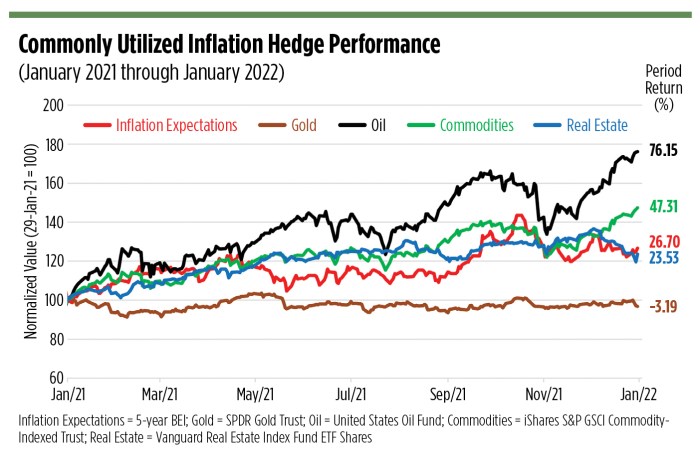
An inflation hedge refers to an investment that helps protect the value of assets against the erosion of purchasing power caused by inflation. In times of rising prices, having investments that can outpace inflation is crucial to preserving wealth.
Real Assets
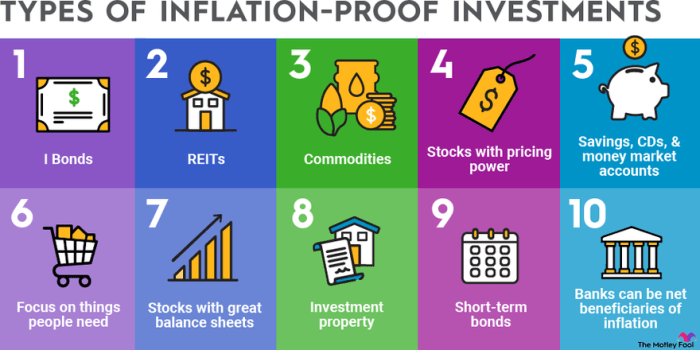
Investing in real assets such as real estate, commodities, and precious metals can serve as effective inflation hedges. These assets have intrinsic value and tend to increase in price during inflationary periods. However, they may require active management and can be subject to market volatility.
TIPS (Treasury Inflation-Protected Securities)
TIPS are bonds issued by the U.S. Treasury that are indexed to inflation. They provide a guaranteed return above the rate of inflation, making them a popular choice for investors seeking protection against rising prices. However, they may have lower yields compared to other fixed-income securities.
Dividend-Paying Stocks
Investing in dividend-paying stocks of companies with strong fundamentals can also be a good inflation hedge. Companies that regularly increase their dividends can provide a source of passive income that tends to grow over time. However, stock prices can be volatile and subject to market fluctuations.
Gold and other Precious Metals
Gold and other precious metals have long been considered a traditional hedge against inflation. These assets tend to retain their value or even increase in price during inflationary periods. However, they do not generate income like dividend-paying stocks and can be influenced by factors such as geopolitical events.
Conclusion
In conclusion, there are various investment options available in 2024 that can serve as effective inflation hedges. Each option comes with its own set of pros and cons, and the key is to diversify your portfolio to mitigate risk and protect against the impact of inflation on your investments.
Insurance Premiums
Insurance premiums are the amount of money an individual or business pays for an insurance policy. These premiums are influenced by various factors and are calculated based on the level of risk associated with the insured property or individual.
Factors Influencing Insurance Premiums
- The type of insurance coverage required: Different types of insurance policies have varying levels of risk associated with them, which can impact the premium cost.
- The location of the insured property: The geographical location plays a significant role in determining insurance premiums, as areas prone to natural disasters or high crime rates may result in higher premiums.
- The age and condition of the insured property: Older properties or properties in poor condition may require higher premiums due to the increased risk of damage or loss.
- The individual’s or business’s claims history: A history of frequent claims can lead to higher premiums, as it indicates a higher level of risk for the insurer.
Importance of Insurance Coverage in Investment Portfolio
Insurance coverage is a crucial component of a diversified investment portfolio as it helps mitigate potential financial losses due to unforeseen events. By having insurance in place, investors can protect their assets and ensure financial stability in times of need.
Tips to Optimize Insurance Premiums
- Compare quotes from multiple insurance providers to find the best rates for the desired coverage.
- Bundle insurance policies with the same provider to potentially receive discounts on premiums.
- Review and update insurance coverage regularly to ensure it aligns with current needs and circumstances.
- Consider a higher deductible to lower premiums, but make sure you can afford the out-of-pocket costs in the event of a claim.
As we conclude our exploration of Best Inflation Hedge Investments 2024, remember that informed choices today lead to a secure tomorrow. Equip yourself with the knowledge gained here to make sound investment decisions and protect your financial well-being in the years ahead.
FAQ Corner
What are income funds?
Income funds are investment vehicles that primarily focus on generating regular income through dividends, interest, and other fixed-income securities.
How do index funds work?
Index funds are passively managed funds that aim to replicate the performance of a specific market index, offering diversification at a lower cost compared to actively managed funds.
What is an inflation hedge?
An inflation hedge is an investment that retains or increases its value over time, protecting investors from the erosive effects of inflation on their purchasing power.
How are insurance premiums calculated?
Insurance premiums are determined based on various factors such as age, health status, coverage amount, and risk profile of the insured individual.
Why is insurance coverage important for an investment portfolio?
Insurance coverage is crucial as it provides financial protection against unforeseen events, reducing the impact of risks on your investment portfolio.


