
Inflation Hedge Portfolio Diversification sets the stage for this enthralling narrative, offering readers a glimpse into a story that is rich in detail with a casual formal language style and brimming with originality from the outset.
As we delve deeper into the intricacies of income funds, index funds, and effective inflation hedges, a world of financial possibilities unfolds before us, revealing the key strategies for a robust investment portfolio.
Income Funds
Income funds are investment vehicles that primarily focus on generating income for investors through dividends, interest payments, or other distributions. These funds typically invest in various fixed-income securities such as bonds, preferred stocks, or dividend-paying equities.
Return Generation
Income funds generate returns for investors through regular distributions of income generated by the underlying securities in the fund’s portfolio. These distributions are usually paid out monthly, quarterly, or annually, providing investors with a steady stream of income.
Risk Comparison
Income funds are generally considered less risky compared to other types of investments such as growth stocks or speculative ventures. The focus on income generation and the stability of fixed-income securities within the portfolio help reduce the overall volatility and downside risk for investors.
Examples and Performance
Examples of income funds include bond funds, dividend-focused equity funds, and real estate investment trusts (REITs). These funds have historically provided investors with a combination of income and capital appreciation. For instance, bond funds have offered stable returns through interest payments, while dividend-focused equity funds have provided income through dividend distributions from profitable companies.
Index Funds
Index funds are investment funds that aim to replicate the performance of a specific financial market index, such as the S&P 500 or the Dow Jones Industrial Average. These funds are passively managed, meaning they do not require active trading or stock selection by fund managers. Instead, they simply hold the same securities as the underlying index in the same proportions.Investing in index funds offers several benefits for portfolio diversification.
By holding a broad range of securities that mirror the index, investors can achieve instant diversification across various industries and companies. This helps reduce the risk of poor performance from individual stocks and provides exposure to the overall market’s performance.
Popular Index Funds and Expense Ratios
- Vanguard Total Stock Market Index Fund (VTSAX): This fund tracks the performance of the CRSP US Total Market Index and has a very low expense ratio of 0.04%.
- iShares Core S&P 500 ETF (IVV): This fund mirrors the S&P 500 index and has an expense ratio of 0.03%, making it a cost-effective option for investors.
- Schwab U.S. Broad Market ETF (SCHB): With an expense ratio of 0.03%, this fund provides exposure to the entire U.S. stock market, offering diversification at a low cost.
Inflation Hedge
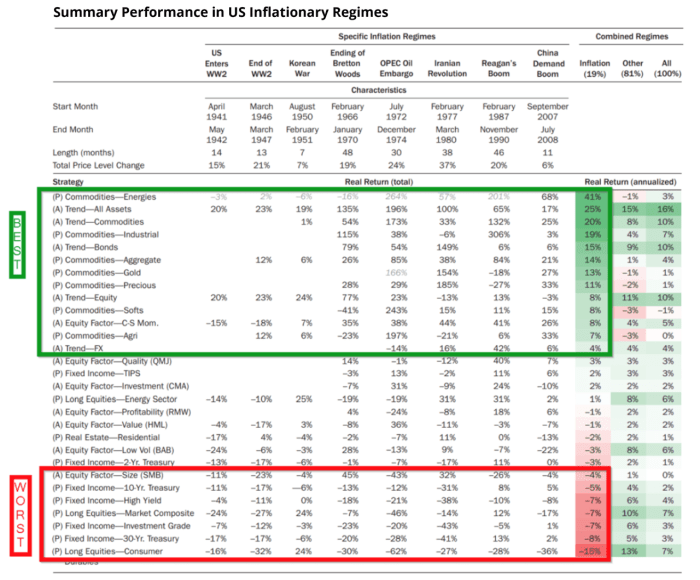
An inflation hedge is an investment that is expected to maintain or increase its value over time, even when prices are rising. It is important for investors to include inflation hedges in their portfolios to protect the purchasing power of their assets during times of inflation.
Types of Assets as Inflation Hedges
- Real Estate: Real estate investments can act as an inflation hedge as property values tend to increase with inflation.
- Commodities: Precious metals like gold and silver, as well as other commodities like oil and agricultural products, are often used as inflation hedges.
- TIPS (Treasury Inflation-Protected Securities): These government bonds are indexed to inflation, providing investors with protection against rising prices.
- Stocks of Inflation-Resistant Companies: Companies that have pricing power and can pass on increased costs to consumers are considered good inflation hedges.
Performance of Assets as Inflation Hedges During Economic Downturns
During economic downturns, the performance of various assets as inflation hedges can vary. For example, gold and other precious metals tend to perform well as investors seek safe-haven assets. Real estate may see a decline in value initially but can recover as the economy stabilizes. TIPS provide a guaranteed return above inflation, making them attractive during economic uncertainty. It is essential for investors to diversify their portfolios with a mix of these assets to mitigate the impact of economic downturns and rising inflation.
Insurance Premiums
Insurance premiums are the amount of money an individual or business pays to an insurance company in exchange for coverage against specified risks. Several factors influence insurance premiums, including the type of insurance, coverage limits, deductible amounts, the insured party’s risk profile, and the insurance company’s underwriting guidelines.
Factors Influencing Insurance Premiums
- Age and Gender: Younger individuals typically pay lower premiums, while males may pay more for certain types of insurance.
- Health Status: Health insurance premiums are influenced by pre-existing conditions and overall health.
- Occupation: Riskier occupations may lead to higher premiums for life or disability insurance.
- Location: Areas prone to natural disasters or higher crime rates may result in higher property or auto insurance premiums.
Pricing Structures of Different Insurance Products
- Life Insurance: Premiums can be level or increase over time, depending on the policy type.
- Auto Insurance: Factors such as driving record, age, and type of vehicle impact premiums.
- Health Insurance: Premiums vary based on coverage level, deductibles, and network providers.
Strategies for Managing Insurance Premiums
- Shop Around: Compare quotes from multiple insurers to find the best rates.
- Bundle Policies: Combining multiple insurance policies with one insurer can lead to discounts.
- Review Coverage Regularly: Adjust coverage limits and deductibles as needed to manage costs.
- Maintain a Good Credit Score: Some insurers use credit history to determine premiums.
In conclusion, Inflation Hedge Portfolio Diversification emerges as a crucial tool in navigating the complex landscape of investments, ensuring stability and growth in the face of economic uncertainties. By incorporating the right mix of assets and strategies, investors can safeguard their wealth and achieve long-term financial success.
FAQ Summary
What are the key benefits of income funds?
Income funds provide regular income streams to investors through dividends and interest payments, making them a reliable source of returns.
How do index funds help in portfolio diversification?
Index funds offer broad exposure to various market sectors, reducing the risk associated with investing in individual stocks and providing a cost-effective way to diversify.
Which assets are considered effective inflation hedges?
Assets such as real estate, commodities, and Treasury Inflation-Protected Securities (TIPS) are often used as effective hedges against inflation due to their ability to maintain or increase in value during inflationary periods.
How can investors manage insurance premiums within their investment portfolio?
Investors can manage insurance premiums by choosing the right coverage levels, comparing quotes from different providers, and exploring options to bundle policies for potential savings.


